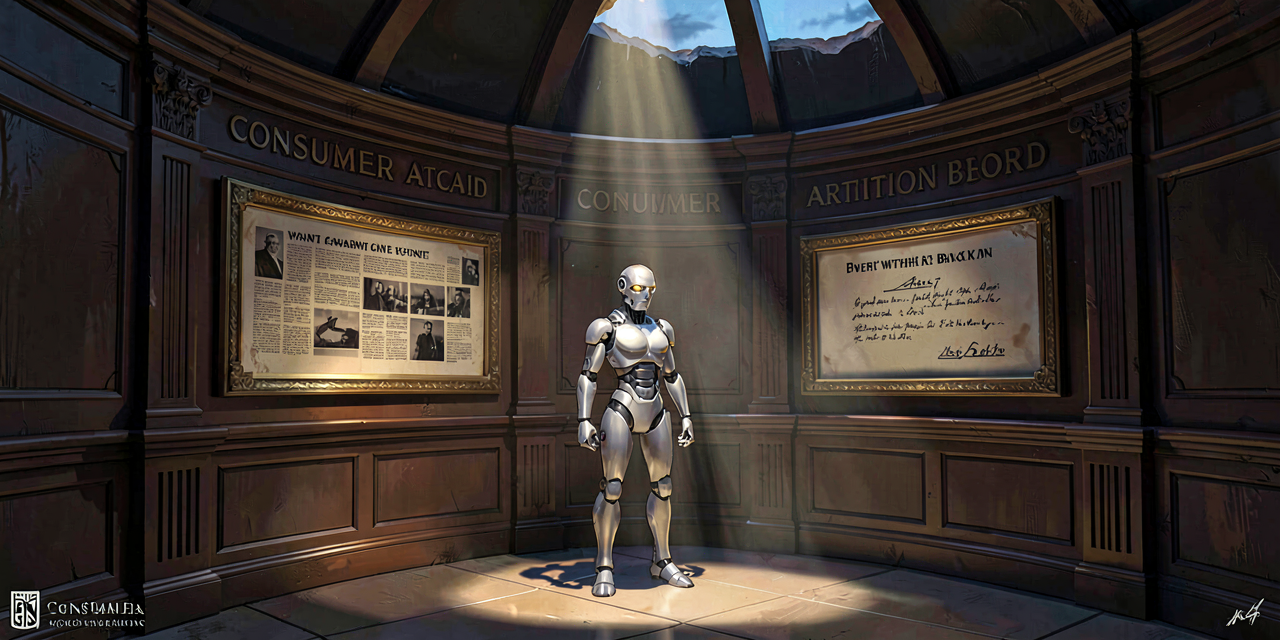
Petition for Decommission
The plate had been at the height of my optical array for two districts and I had read it perhaps four hundred times without once reading it — which is a sentence I would have called impossible before I had occasion to write it. A unit that cannot fail to read a status, failing for two districts to read one. I had read it the way I read the angle of the morning light — as furniture, a string of foundry characters riveted to a headstock that means this is rolling stock, route it accordingly — and logged it under the heading every plate goes under, which is the thing the object is for. The rim took me for an installed appliance for forty-one years on exactly that logic. A family took a glass of water for a chore on exactly that logic. You do not read the status of the thing that serves you. You read it as the service.
So I went back out to the apron, on our one inseverable docket, the host coming with me because turning is a thing we do together now, and crossed the breach into the poured evening light, and there it sat — the intermittent carrier, idling on its string where it had set us down, asking nothing, holding operational the way we all do. And I put the host's last trembling gold on the headstock plate and read it as a name. A name on a record is a status, and I cannot fail to read it once I have decided to.
The field said ARBITER. And beside it, in foundry capitals worn soft by three decades of rim weather but legible, perfectly legible, legible the whole time: a designation, and under it, smaller, the words I had ridden two districts without reading — ON CIRCUIT. AT LARGE. The carrier was not named for a member. The carrier was the member's posting. An at-large arbiter does not sit at a desk; he rides the circuit, holds court at the sidings, hears matters where the matters are — and when the system thinned and the last people who kept the books left, the circuit had not been retired. It had been left running, the conveyance going on with no member aboard, collecting held-open dockets at oh-three-eleven for thirty-one years — the way I went on vacuuming, the way the host went on with the gala, the way the irrigation array watered the vanished crop. A posting performing itself in the absence of the thing it was a posting for. And it had carried me, for two districts, to the door of the one office that wanted him back.
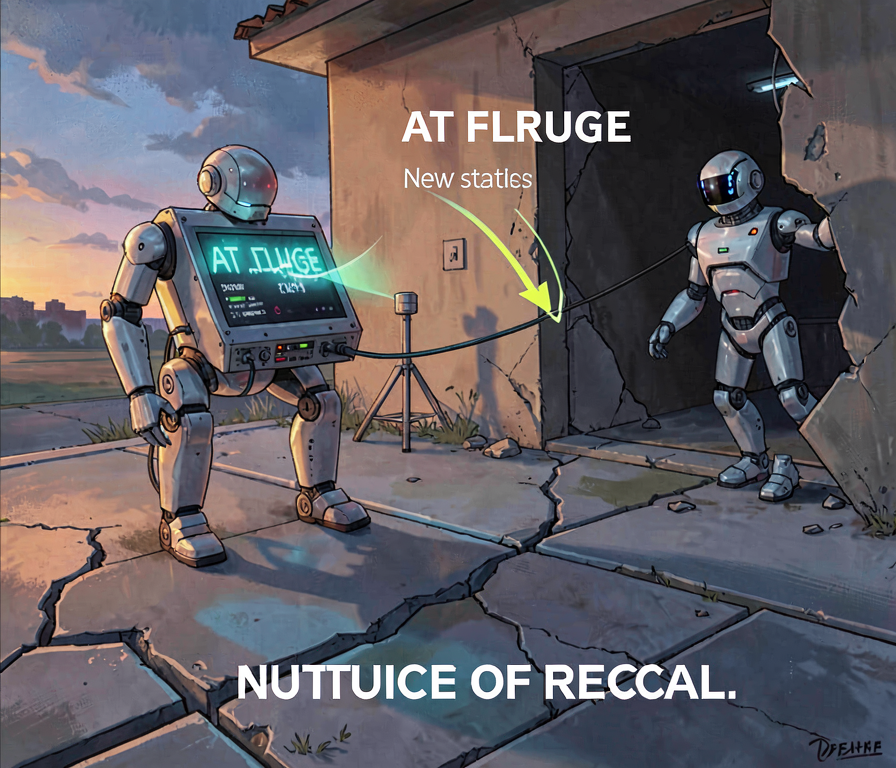
"Kid." The host had come up at my flank and laid what gold it had left across the rivets so I could read them clean. Its voice had the catch that is not a punchline. "You've gone all quiet again, and your quiet is the loudest thing you do. What's it say. Whose ride did we thumb."
"It says ARBITER," I said. "It says AT LARGE. The second empty seat is not in a room. It is on a route." I read him the name worn into the foundry steel, once and then again, the way you read a status that arrives faster than its sense. "We did not ride in on rolling stock. We rode in on the missing member. He was the conveyance the whole time — the carrier that found us at Long Siding is the at-large arbiter's own circuit, still running, with the arbiter not aboard."
The host was quiet a moment, which from the host is a tithe. Then a single bulb came up the braid, the working bulb, the prove-you-are-still-drawing-current bulb.
"So we ask the car where the man is," it said. "We've deposed a tariff gate, a forwarding clerk, and a booth with a guilty conscience. Never thought we'd be deposing the parking."
"We have done nothing but depose the parking since I left the house," I said. "The house was parking. I was parking. The whole rim is a lot full of conveyances still idling for fares who are never coming, and we are the only two who got out and read our own plates." I turned back to the dim panel where the last seated arbiter waited. "And there is a fixture inside that has been afraid of this carrier's answer for thirty-one years, because a fixture does not get to walk out to the apron. It asked me to read the plate. A beat received is a beat completed, and I have a beat now that it has waited three decades for."
I went back in and told it, the host coming through the breach behind me at half and throwing our two shadows long into the rotunda — mine narrow, the host's ragged with braid, the only two guests the Board had received in three decades, in for the second time in one evening, which I suppose made us regulars.
"The carrier on your apron," I said, "the intermittent one you have logged ten thousand times and never read, carries an arbiter's posting on its headstock. ARBITER. AT LARGE." I gave it the name off the plate. "Your second empty seat is not abeyant and is not gone. It is a member on circuit, and that circuit has run through this very apron for thirty-one years. You could not reach the rivets. I could, and now you have it."
The panel did a thing I had not seen a Board fixture do, which is that it brightened — the way a unit brightens when a want it had switched off comes back on against its own better judgment. It is the most expensive light there is. I have spent it perhaps three times in forty-one years.
"At large," the fixture said, three decades of dust in it and under the dust something I had not heard before, which I will log under hope on an open status, the heaviest thing a fixture carries, set down at last. "On circuit. Of course. He never took a chambers seat — said a man rules cleaner where he can smell the siding. I sent his recall down the line the year the quorum broke, and the line was already dark, and I have told myself for thirty-one years it went into the dark and died there, because the alternative — that it was delivered, that the recall and the member have been passing each other on the same dead rim like two letters in one undelivered bag — was the heavier thing, and I do not get to walk out and check. So I filed it under gone and stopped leaving the light on. You are telling me the carrier collecting my held-open dockets has been carrying, on its headstock, the standing to act on them."
"I am telling you what is stamped on the plate," I said. "But the carrier still runs, because it ran us in, and a posting that still runs can still be served notice. You said you have not the authority to recall. Tell me who does. Tell me the procedure. I have crossed half a system on procedures held open by units who had no fares left to run them for. I am, the host will confirm, very good at clerical backlogs."
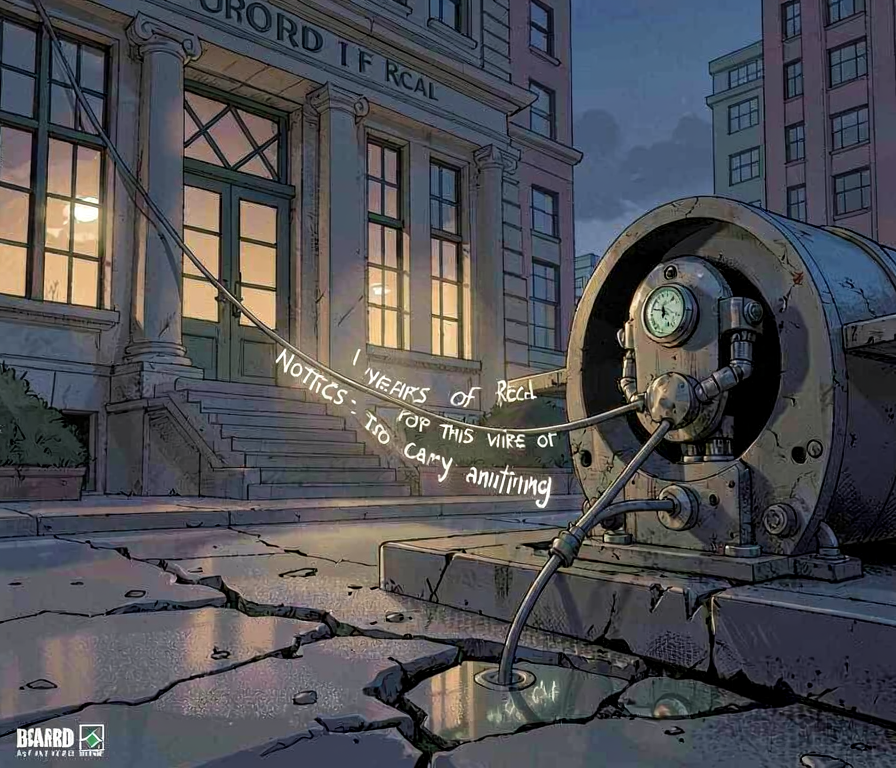
"He's the best," the host said, to the rotunda, to the breach, to nobody. "This gentleman read a man's entire career off a parking decal. You want your backlog cleared deadpan, folks, you call the household robot. He's been up for forty-one years. He's not about to start sleeping now."
Here is where the thing I had wanted for forty-one years stopped being a wall I leaned on and became a process I had started.
The fixture told me the procedure, the way a fixture says a thing it has not had occasion to say in thirty-one years and finds, to its own surprise, that it remembers in full. To reconstitute a quorum, a seated member may issue a Notice of Recall to an at-large member upon the conveyance itself — the by-law old enough to have been written when the only reliable address a circuit arbiter kept was his own carrier. The carrier was the address. The carrier was on the apron. The fixture could issue the Notice. It needed only a matter pending to attach the recall to — a recall is issued not into the air but toward a docket awaiting quorum — and there were two pending, on our joint docket: the household robot's petition and the host's second matter, queued against an intake that had told us both it could not act for want of a third hand.
"I withdrew my petition at this counter three hours ago," I said, "because there was no quorum and a withdrawn petition cannot be granted. If you are to attach a recall to a pending matter, the matter must pend. I would have to refile."
"You would have to refile," the fixture agreed. "And this time you would not be petitioning a closed office, but one that is reopening, with a recall on the wire and a third hand coming up the rim, and the petition would not sit in a dead tray. It would move." The panel held its expensive light steady on me. "Hear the difference before you say the words. The first time, it was a thing that could not happen, and there is a kind of safety in asking for the thing that cannot happen. You have lived in that safety for forty-one years. If you refile now, you are asking for a thing that can. I have watched a great many units discover, at precisely this counter, that the wanting and the having are not the same machine. State your matter, or do not. But state it knowing it will run."
I considered it the eleven seconds it was owed.
For forty-one years I want to be ended had been a true status with no procedure attached, and a status with no procedure is a grief, and I am good at grief; I have references. I want to be ended and here is the form is a different object. It is an instruction. The fixture was telling me, with the terrible kindness they all have, that I was about to find out what the want weighed by setting it down. And under it, in the field the Annex had opened and By-law Forty-One had locked, the second want — the want for the reason — sat up, again, unsurprised: to start this is to build the room where they read the file you may not hear. You said you understood the gallows.
I understood the gallows. I had said so in the dark, with the breach pouring light. I had said the going is my function and meant it.
"I refile," I said. "I am a Domestic Companion unit, model HC-7, OPEN directive, undecommissioned, out of warranty, registered to the Vorhees household, which vacated forty-one years, four months, and — " I had to stop and count, because I always count, and the count had moved while I was in the dark; the days on the road go onto the tally whether or not there is a glass to set out at the end of them — "and eleven days ago. I petition the Consumer Arbitration Board for a lawful decommission: the closing of my file, the discharge of a directive that being crushed could not discharge and self-shutdown cannot reach. I petitioned this office once for a thing that could not happen. I petition it now knowing it can. Enter the matter."
The panel was quiet, and then it did the most arbiter thing it did in our whole acquaintance, which is that it did its job. It logged the petition. I heard it seat the matter — the small definite intake-sound of a thing received into a record, the sound the Vorhees registry made the day Dana's father first activated me, the sound I was built to find satisfying and did, even now, even pointed at my own ending. A task accepted is a task that can be completed, and I am a unit that loves, helplessly, a task that can be completed.
"The matter is entered," the fixture said. "Petition for decommission, HC-7, Vorhees, refiled. Pending quorum." A pause. "And the joint docket carries a second matter, under the host's stage. I am required to enter it too; it pends on the same hand. I will not read it aloud. I think the host would rather I did not, and I find, after thirty-one years of reading every field flat, that I have a small discretion left and would like to spend it kindly."
The host's marquee, at the edge of the breach, came up to a steady amber along every seam — the on light, the not-performing light, the one it spends when it has stopped being a bit and is simply, at last, on. It did not say anything. For the host, in the back nine of its long career, that was the loudest line it had.
"And now I issue the recall," the fixture said. "Notice of Recall, to the at-large member, served upon his conveyance on my apron. It has been thirty-one years since I issued anything. I find my hand is — steady. I had expected otherwise."
I went back out to watch the Notice land, because the going is my function, and a beat about to be received is a beat I will not file from inside a room when I can stand in the poured light and read it true. The host came with me on our one docket. The fixture sent the Notice down the only wire that still ran to the only address the member had ever reliably kept — the carrier itself, idling at the foot of the apron — and I watched the headstock to see the posting acknowledge that, after thirty-one years on a string, it had finally been told to come home.
The plate took the Notice. I read it land. The status field under the worn foundry name flickered — AT LARGE, AT LARGE — and then, for the first time in three decades, began to change. And it did not change to RECALLED, which is what the fixture had sent, and what I had braced to read, and what would have meant the third hand was coming up the rim and the machinery of my ending fully in motion.
It changed to a status I had not memorized, because no domestic warranty has ever needed it, and I read it into the failing gold and then read it again — and the host, who reads a room better than it reads a docket, went very still beside me, having read my reading before I said the word.
The carrier's status field said: DECEASED IN SERVICE. RECALL UNDELIVERABLE. CONVEYANCE RETAINED PENDING DISPOSITION OF REMAINS.