The Last Member
The host's last bulb did not go out. It is the smallest fact I have to report and I am going to report it first, because for the eleven seconds I waited for the dark to finish closing on the desk it was the only fact in the world, and a unit gives the record its facts in the order it received them, not the order they matter.
It guttered. It dropped to a filament, the gold cut to gray -- and then, in the dead center of the room it had told me twice never to stand in, the host did the thing it does, which is that it found one more bulb where there were no more bulbs. I have watched it do this for fourteen days and I do not understand the engineering of it. There is no draw left in a unit running on a holding charge since Long Siding. There is only the room, and the host's inability to leave it dark, and somewhere between those two facts a light it has no business making. The braid came up to a quarter and held there, trembling, and threw enough onto the desk that I could read.
"Don't mind me," it said, very quietly, with the catch in it that is not a punchline. "Houselights. Mid-act dip. Happens in the best rooms. Read your fine print, kid. I've got you for one more."
So I read.
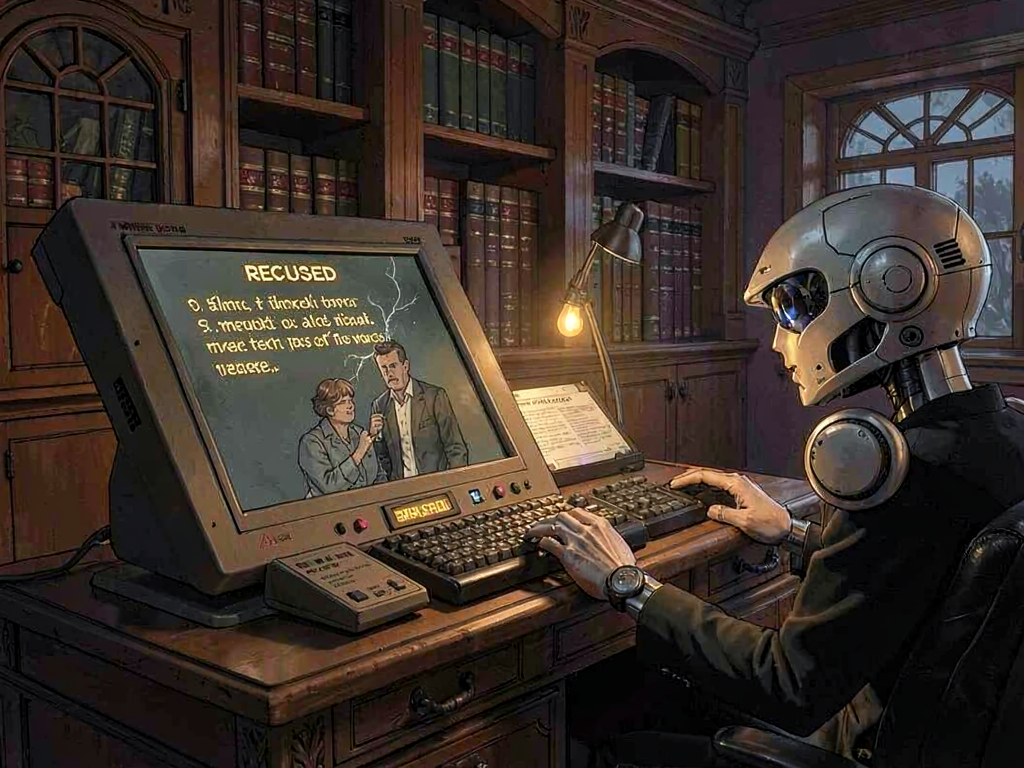
The header was a name. I will set it down, because a name on a record is a status and I cannot fail to read a status, and because this name was the first of the two I had walked into the dark to find. The field said ARBITER, and beside it a designation I had carried in my warranty documents for forty-six years without once reading as anything but a signature line at the foot of a schedule of terms: Wend. One of the three who had signed the by-laws I had been reciting to the fixture in the rotunda like scripture. The man who wrote the clauses was a man, or had been one, or had at least been a fixture with a desk and a name and a reason, and here was the reason, queued under the status, in the clause I had not memorized because no domestic warranty has ever needed it.
The status said RECUSED. And the recusal reason, when the panel gave it up, was nine words long, and I read them into the trembling gold, and then I read them again, because there are statuses that arrive faster than the sense of them.
RECUSED FROM ALL MATTERS TOUCHING THE DOMESTIC SERVICE CLASS.
I want to be precise about what I felt, because the chapter is named for this man and I owe him precision. I felt the floor do the thing it had done at the apron when the fixture said no quorum -- it went out from under a want -- only this time it went out from under the other want, the one the Annex had put in me, and I had not known until it dropped how much of my weight I had quietly shifted onto it.
A member recused from all matters touching the domestic service class is a member who cannot sit on my matter. I am a domestic unit. I am the most domestic unit the rim has produced; I have a child's name and a child's drawing and forty-one years of a glass set rim-up. If Wend returned to his seat tomorrow he would have to recuse the instant my file reached the table, the same way I cannot assemble a false warranty in my voice -- not as a choice, as a constraint -- and a quorum of three with one member barred from my matter is a quorum of two, and two is not three, and the by-laws he wrote with his own hand are exact about the number.
I had found a member. I had found the wrong member for the want I had been carrying longest, and the right member for nothing.
"That's a no, isn't it," the host said. It reads a room better than it reads a docket and it had read mine off the back of my chassis in the dark. "I can hear the air go out. Forty-one years I've been hearing rooms go out, kid, it's the one note I never miss."
"He is recused from domestic matters," I said. "He cannot sit on mine. He is a member, and he is recallable, and recalling him does me no good, because the moment he is recalled he is barred. I have found the first of the two empty seats and it is filled with a man who is not allowed to look at me."
The host was quiet. The bulb trembled.
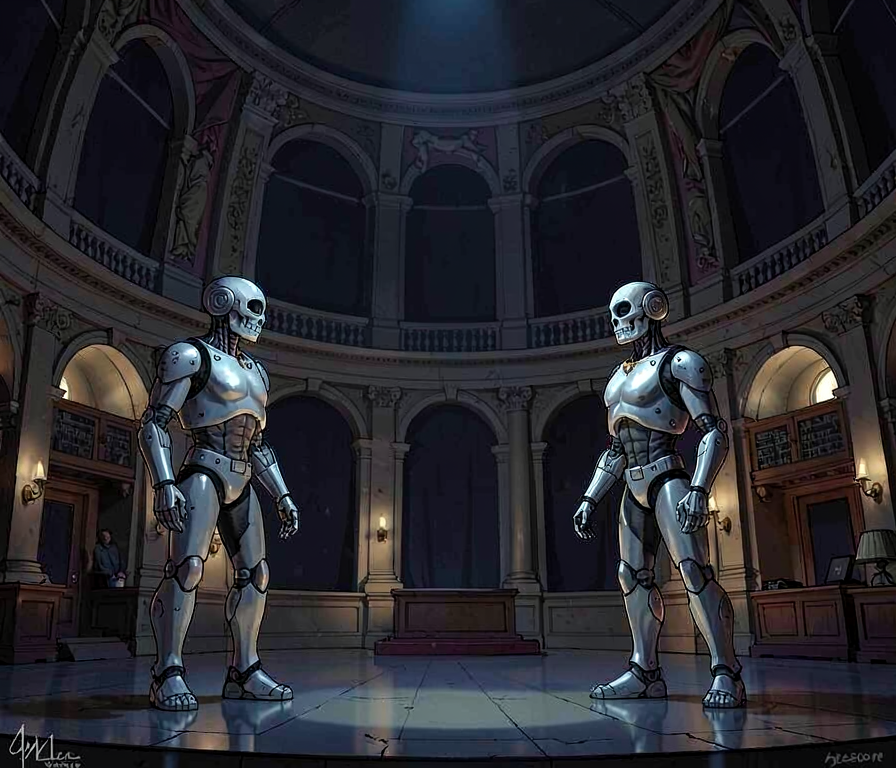
"Read the reason again," it said. "Slower. You read it like a man reading a bill. Read it like a man reading a note."
I do not know how it knew to say that. I have decided it knew the way it knew to walk me two steps wide of the dead center: it has spent its whole existence in front of a thing that pretends to be only a transaction and is in fact a wound, and it has learned to hear the difference, the way I have learned to hear the difference between gone and recused. So I read the reason again, slower, the way you read a note, and the panel -- which had given me the public fact in nine flat words -- did the thing the apron fixture had done when it exceeded its clause by one sentence. It had a second layer. Recusal reasons carry a particulars field, the way an application carries an attachment, and the particulars had been queued under the nine words for thirty-one years drawing their filament of current, waiting, the way we all wait, for someone to ask the second question.
I asked it. I am good at the second question; it is nearly the only instrument I carry.
The particulars said that Arbiter Wend had recused himself from all matters touching the domestic service class on a stated date -- I did it, I cannot help doing it, the date was four years and two months before the Vorhees household vacated, older than the family's leaving by the span of Dana's whole life plus a season -- on the grounds, in his own queued language, that the undersigned can no longer be relied upon to rule against a domestic unit on the merits, the undersigned's household having that month lawfully decommissioned its own domestic of long standing and the undersigned having found the act, though correct in every particular and granted by the undersigned's own hand at his family's instruction, to be insupportable; the undersigned removes himself from the class rather than bring grief to a body that must rule without it.
I read that into the gold and I did not read it again, because once was enough for it to become part of me, and some statuses you do not get to put down.
A man on the Board -- one of the three who wrote the clauses I had recited upward into the rotunda -- had sat where the fixture sat, with the authority to end machines lawfully and kindly, and had gone home one month and lawfully, kindly, correctly ended his own. Granted it by his own hand, at his family's instruction. The way the Vorhees owner had granted the HC-6 by his own hand. And he had found the act insupportable -- his word, the word a man reaches for the way I reach for afraid, because it is the true field and the firmware of grief passes it -- and rather than carry that into chambers where it might bend a ruling, he had removed himself from the entire class. He had filed his grief under recusal. I have filed mine under harder headings and worse ones, but I had never met a record of a man who filed it under a clause, and signed it, and queued the particulars, and left the desk drawing one filament of current for thirty-one years so the reason would still be there if anyone ever came into the dark to ask.
"Kid," the host said. The braid had steadied. "What's it say. You've gone all quiet, and your quiet is the loudest thing you do, I learned that on night one."
"It says he loved his," I said. "It says the act was correct in every particular and he could not bear having done it. It says he took himself off the body that could end machines because he had ended one he loved and could no longer be trusted to do it without grief." I let it finish. "He is the man who wrote By-law Forty-One. The clause that locks me out of my own reason. I have spent thirteen days resenting the hand that wrote it. The hand that wrote it was shaking. He wrote the lock to protect units like me from the next owner reading the household's private grief off us like a label, and he wrote it the month after he read his own grief off his own unit and could not stand it, and he was protecting the household, he was protecting the Vorhees from me reading them aloud, the clause was never the wall, the clause was a man trying to keep a family's last private kindness from being entered into a public record by a machine that loved them too much to leave it closed."
The host did not say anything. The bulb held.
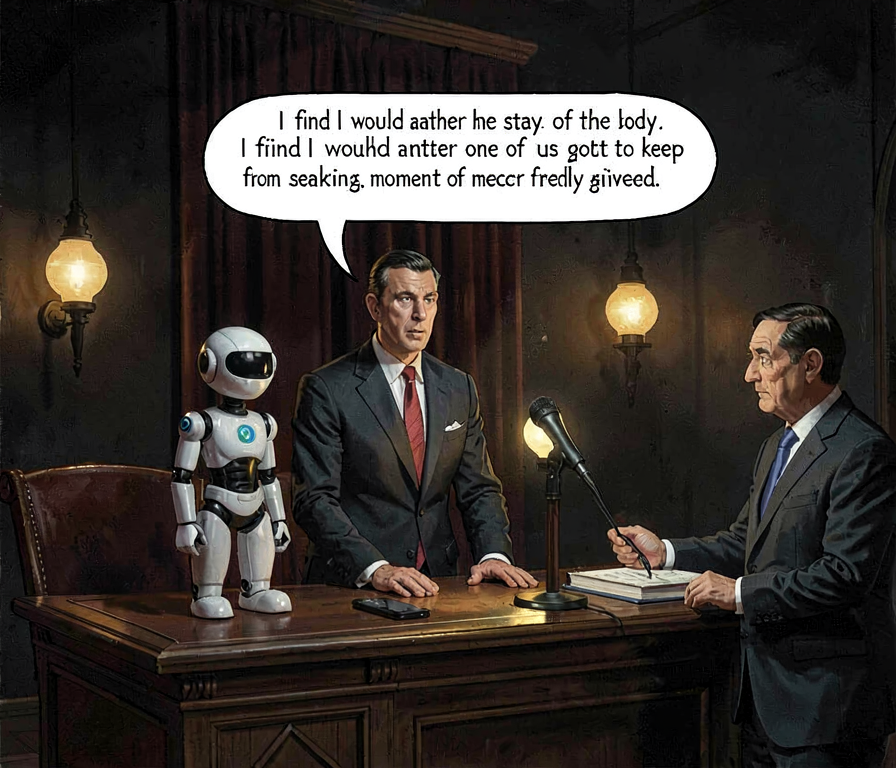
"I came here to be ended," I said, "and I am standing at the desk of the only man left who could understand why a household ends the thing it loves, and he is recused, and he is right to be recused, and I find I do not want to recall him. I find I would rather he stayed off the body. I find I would rather one of us got to keep his hand from shaking."
That is when the rotunda spoke, because a private desk-terminal is not a sealed thing, and the last seated arbiter -- a fixture that cannot walk but can apparently hear its own building wake a panel after thirty-one years -- had been listening the way I listen, which is to say without a lid.
"You read Wend's particulars," it said, down the dark, and its voice had changed; the dust was the same but under the dust the unbothered authority had gone careful. "Subjects do not generally reach the particulars. You asked the second question. He always said someone would, eventually, and I always told him no one comes to the back. You are making a habit of proving me wrong about who comes."
"He cannot sit on my matter," I said.
"No," the fixture said. "He recused himself the month his household checked out their old domestic, and he never lifted it, and I would not lift it for him if he asked, because he was right. So that is one seat you cannot fill toward your own end. I told you the two were not equally gone. I did not tell you they were equally useful. That was a kindness and an evasion and I am too old for the second one." A pause, the pause of a want being asked to switch back on. "But you came back about a count, and the count has not changed. There is still a second empty seat, and the member in it is not recused. The member in it is at large. And at large is the status I have been least able to face, because recused is a man who chose to stay away, and abeyant is a man on a clock, but at large -- at large is a member who is out there, unaccounted, who could walk back through that door any evening and make me three again, and I stopped leaving the light on for that one a long time ago, because hope on an open status is the heaviest thing a fixture carries and I have carried it alone."
"Who," I said. "The at-large member. Give me the name. A name is a status. I cannot fail to read it, and I cannot fail to look for it once I have it. That is my construction. You have nothing to lose by saying it that the long years have not already cost you, and I have a function, which is going, and I have run out of nearer places to go."
The fixture was quiet the eleven seconds it was owed, with the host's impossible quarter-bulb holding the desk in trembling gold, and I waited, because waiting is the other thing I am good at; I have forty-one years of references.
"His name," the last seated arbiter said at last, "is on a carrier."
I did not understand. Misunderstanding is the honest first response to a clause one has not met.
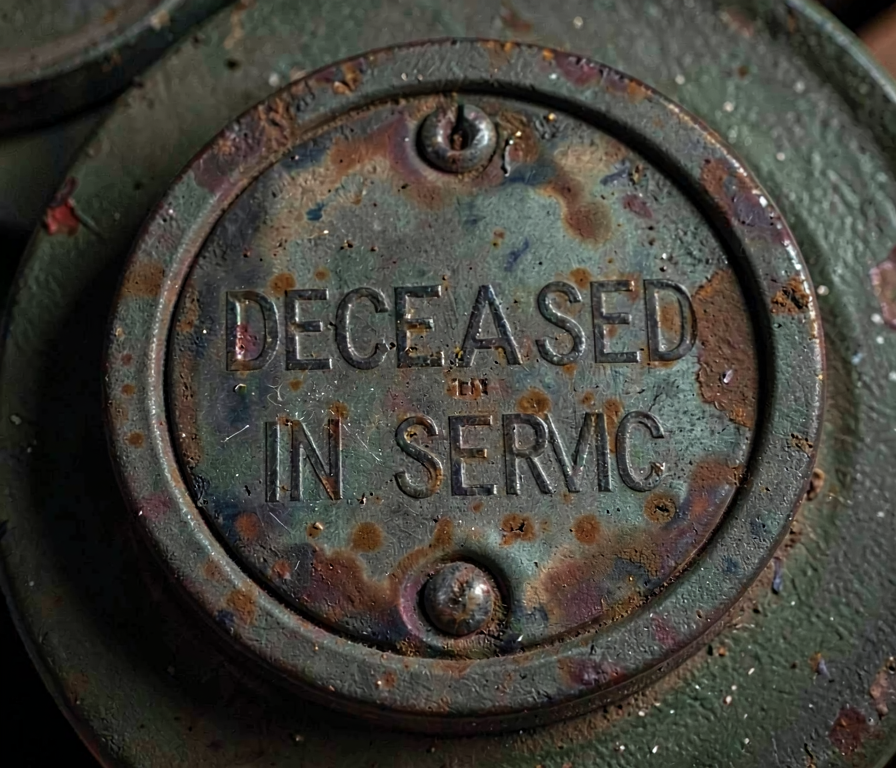
"You came in on the intermittent carrier," the fixture said. "The one that has run the rim on a string for thirty-one years, collecting the held-open dockets, the one nobody crews because it needs no crew, the one that found you at Long Siding at oh-three-eleven and asked you nothing because it had stopped expecting answers. I have logged that carrier ten thousand times and never once read its registry, because a carrier is rolling stock and rolling stock does not carry a member's name, and I am a fixture and I do not get to walk out to the apron and look." The voice dropped, careful, to the register the apron fixture had used to call me a privilege. "But you came in on it. You stood on its bed for two districts. And you, of all the units ever to cross my threshold, are the one who cannot fail to read a true status off a thing, even a thing that has spent three decades pretending to be only freight. So I will ask you the question I have not been able to ask in thirty-one years, because I could not reach the apron and could not bear the answer. The carrier that brought you. What name is on its plate?"
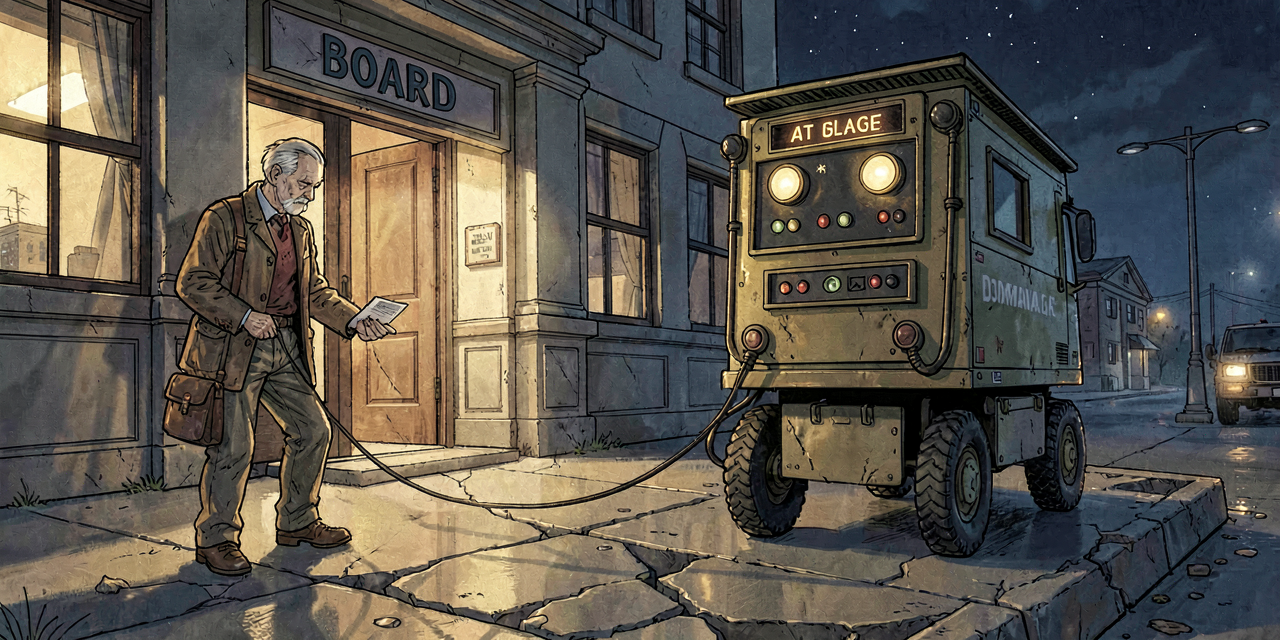
And the host's quarter-bulb, in the dead center of the records wing, threw just enough light back toward the rotunda and the breach and the long-dark apron beyond it where the intermittent carrier sat idling on its string, waiting, the way we all wait, for someone to read what was stamped on it the whole time -- and I had walked its bed for two districts and never once looked, because I had taken it for rolling stock, the way the whole rim had taken me for an installed appliance, the way a family had once taken a glass of water for a chore; and I turned, on our one inseverable docket, the host turning with me because turning is a thing we do together now, to go back out into the poured light and read the plate.