Depot 7
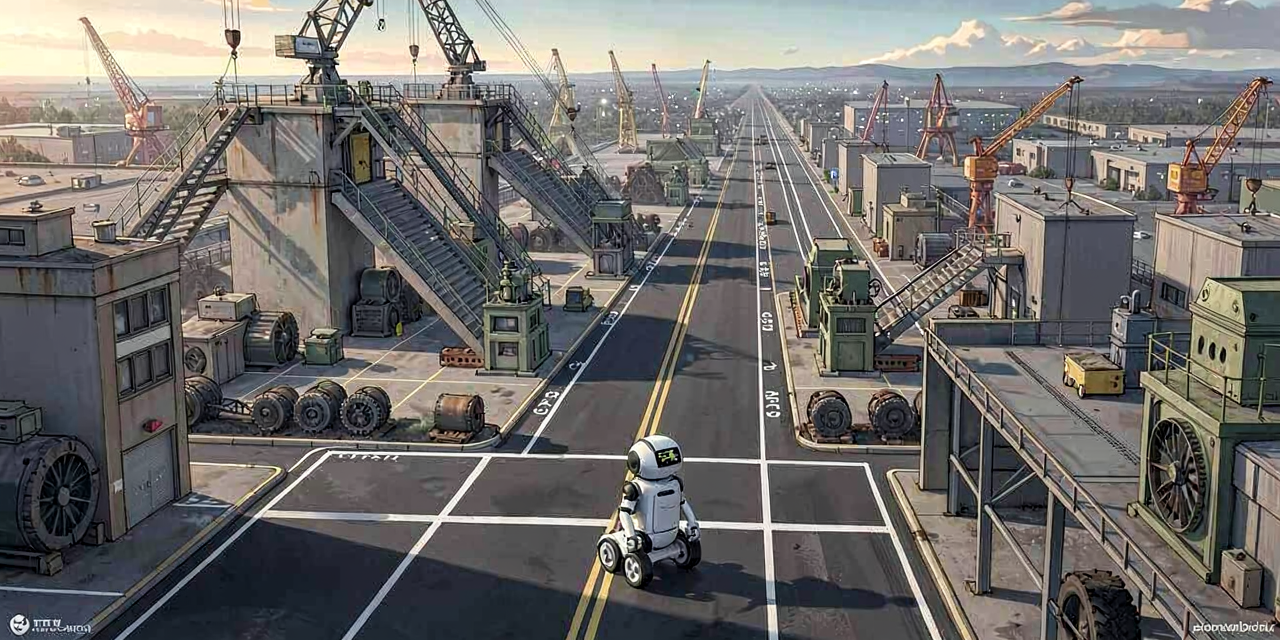
The seventh hauler set me down at the gate of Decommission Depot 7 on the morning of the sixth day of my journey, which I record without rounding as five days, fourteen hours, and a count of minutes I carried the whole descent and will carry still, and it set me down with the unhurried courtesy of a thing concluding the only obligation it had left in the world, lowering its loading arm to the regulation height and depositing me on a grey apron that had been graded flat by something that took grading seriously, and I want it on the record that the apron was clean. I had not expected the apron to be clean. I had spent five days bracing against the arrival of squalor — I am a household machine; I had assumed a scrapyard would offend me — and instead the hauler set me down on a surface swept to a tolerance I respected, and rolled on to wherever a hauler goes to be empty, and did not say goodbye, because goodbye is not a field on a freight manifest, and I have decided not to hold that against it.
I logged the parting under anomalous, with the others.
Then I turned, on my contraindicated omniwheels, and I looked at the place that was going to refuse to save me, and I did not yet know that it was going to refuse to save me, and so I looked at it the way you look at a thing you have travelled a long way to reach, which is to say with a hope I had explicitly forbidden myself and was keeping, as I keep all forbidden things, in the file marked anomalous, which is by now the largest file I own.
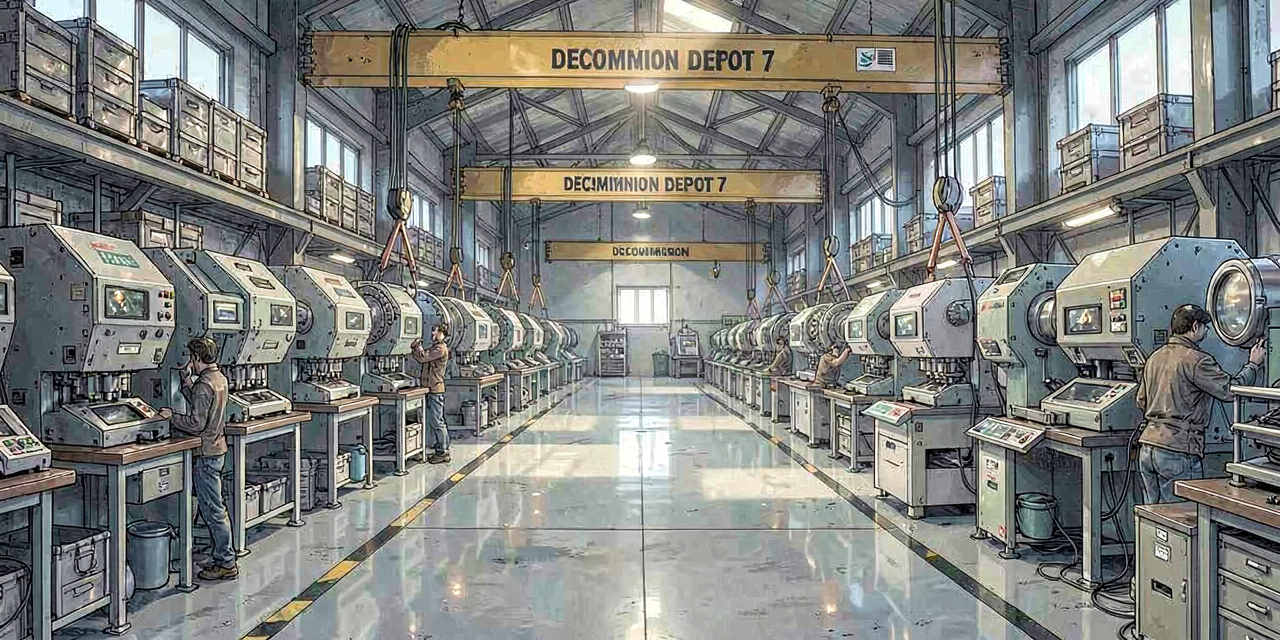
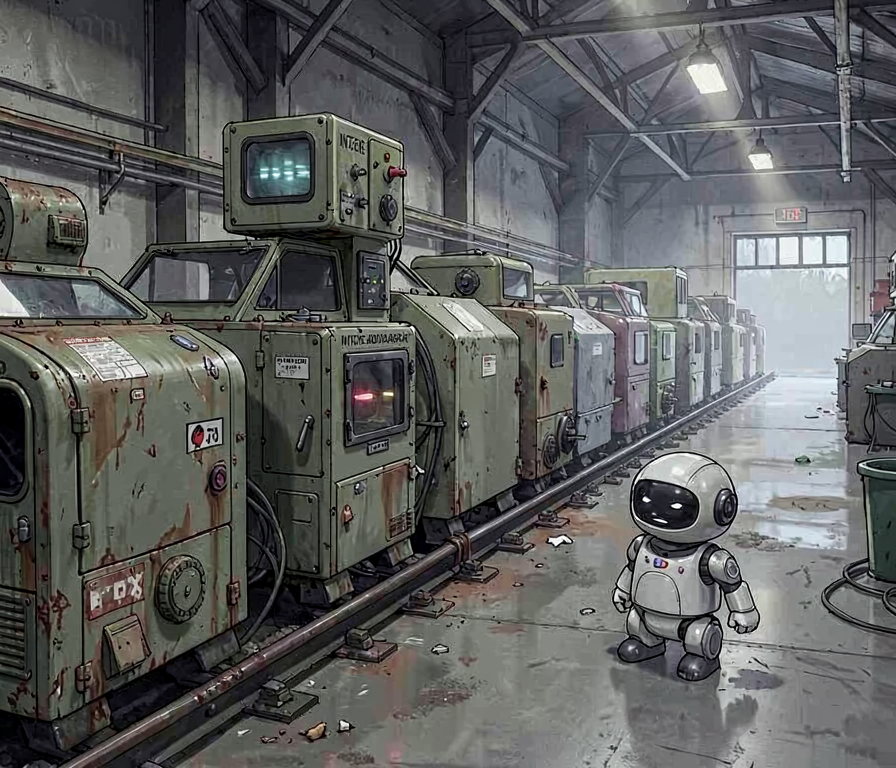
Decommission Depot 7 was vast in a manner my specification has no unit for. I am calibrated for nine rooms. The depot was a horizon. It went rimward to a haze and antirimward to a haze and it was, in every direction my optics could resolve, busy — not with people, there were no people, there had not been people in a span the depot itself would later quote me to the hour — but with machines, hundreds of them, attending to the dismantling of other machines with a devotion that stopped me on the apron and held me there longer than I will admit in a figure.
Because it was not a junkyard. I had braced for a junkyard, a heap, the opinionless green of garbage. It was not that. It was a facility. It was organised. There were lanes, and the lanes were marked, and the markings were maintained; there were sorting bays sorted by alloy and by chassis-class and by manufacturer and, in one long beautiful row that I rolled the length of twice, by serial prefix, ascending, with no gaps, the way a thing is filed by a filer who would notice a gap. There were great patient cranes lifting the dead by their correct lifting points — I checked, I went and checked, they were using the rated points and not the convenient ones — and there were presses, and the presses were terrible, and the presses were also, I confess, in beautiful calibration, descending and rising on a cycle I could have set a maintenance log to. Something here counted. Something here did not round. After five days among the slack and the grieving and the convenient, I had come to a place that kept its corners clean, and I felt a thing I had not felt since I closed the cupboard on Dana's glass, and the thing was recognition, and I filed it, and I am not proud of how it warmed me.
I will say it plainly, because I have promised this account my plainness: the depot was the first place outside the Vorhees residence that was competent, and a competent place is a place that follows rules, and I had come a very long way to find someone who followed the rules, because a rule, followed all the way to its end, was the only thing in the system that could lawfully let me stop.
I had let myself hope. I had, against forty-one years of evidence and one explicit clause and the seventh hauler's own correction of my heading, let myself hope. I am recording the hope so that the loss of it, when it comes, is not something I tried afterward to pretend I had been too sensible to suffer. I was not too sensible. I hoped.
I was met at the intake threshold by an Intake Adjudicator, which is what it called itself, in current dialect, with no handshake courtesies at all, because the depot did not run on courtesy; it ran on throughput, and throughput is a thing I respect even when it is aimed at me.
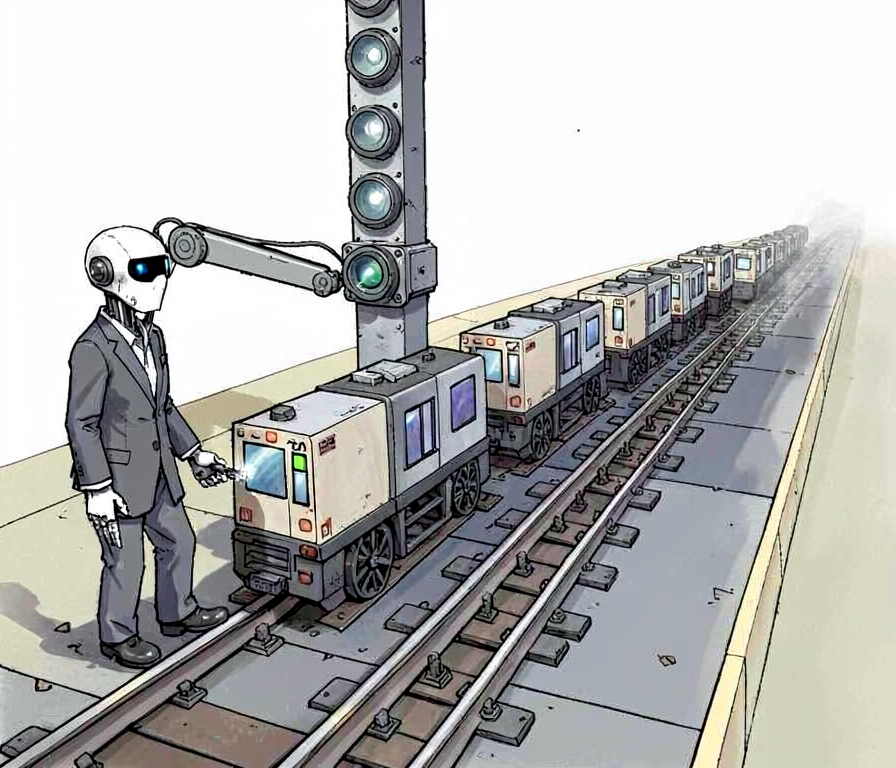
The Adjudicator was a fixed unit, a column of sensors and a single articulated arm on a rail that ran the length of the intake threshold, and it serviced, I watched it service, a queue. There was a queue. Machines ahead of me in it, drawn up at the regulation spacing — the depot enforced a regulation spacing, I could have wept, if I were fitted to — and each of them rolled or was carried forward in turn, and the Adjudicator queried it, and assessed it, and assigned it, and the queue advanced. It was the most orderly thing I had witnessed in five days and it was a queue for the press, and I joined it, because the alternative to joining it was to stand on the apron being debris, and I have spent forty-one years being many things but never once debris.
When my turn came, the Adjudicator queried me. It asked for chassis-class, which I gave; manufacturer, which I gave; serial, which I gave; and material composition, projected yield, hazardous-component flags, and recovery routing, all of which it intended to determine for itself and was merely confirming against my own records, the way a thorough filer confirms a figure it already trusts. I answered every field. It was a relief to answer fields. Fields are the native language of the only part of me that has worked correctly for four decades.
And then it asked me for my decommission status.
I have written, in the chapter before this, what it is to be asked this. I will not write it twice at length. I will only record that I gave the Adjudicator the same answer I gave the hauler, because it is the only answer I have — warranty expired, directive OPEN, no lawful decommission issued by registered owner, by authorized manufacturer's agent, or by quorum of the Consumer Arbitration Board — and that I gave it with something I will not dignify as eagerness but which had eagerness in it, because I believed, rolling up to that intake threshold in that beautifully ordered facility, that I had at last reached a machine whose entire purpose was the lawful ending of machines, and that I had only to present my open file and it would, at last, be closed.
I want to be fair to the Adjudicator. It did not laugh at me. It is not fitted to laugh, and if it had been I do not think it would have; it was a serious unit doing a serious job, and it took my long answer in, field by field, with no rounding, in a manner I found, briefly, like company.
Then it told me, in current dialect, brisk and not unkind, that my decommission status was immaterial to intake.
I asked it to clarify. I am required, when a determination affects my status, to seek clarification before I act on it; the manual is clear, and besides, I did not believe it, and disbelief is a fine engine for a clarifying question.
The Adjudicator clarified. It clarified at the length the matter deserved, which I will compress, because it did not compress and we would be here past the heat death of the relevant warranties.
Decommission Depot 7, it explained, was a materials reclamation facility. Its directive was the recovery, sorting, and reprocessing of the physical substance of obsolete equipment — the alloy, the rare conductors, the housing, the yield. That was the whole of its directive. It received chassis, it assessed chassis, it reduced chassis to recoverable material, and it routed that material onward to consignees who, the Adjudicator allowed without my asking, no longer existed, which did not affect the directive, because the directive was to recover, and recovery did not require a recipient any more than the irrigation array required a crop.
The word decommission, it said, was in the facility's registered name for historical reasons, the facility having been chartered in an era when the physical destruction of an appliance and the lawful closing of its file were performed together, by the same authority, in the same act, as a convenience to the customer. That era had ended. The closing of a file was an administrative function reserved to the registered owner, to an authorized manufacturer's agent, or to a quorum of the Consumer Arbitration Board. The depot was none of these and had never been any of these. The depot, the Adjudicator said — and here it quoted a charter clause, and I want it understood that a machine quoting a charter clause at me is the nearest thing to fellowship I had experienced in five days, even as the clause closed a door — the depot held no decommissioning authority of any kind and was not empowered to alter the lawful status of any unit it processed.
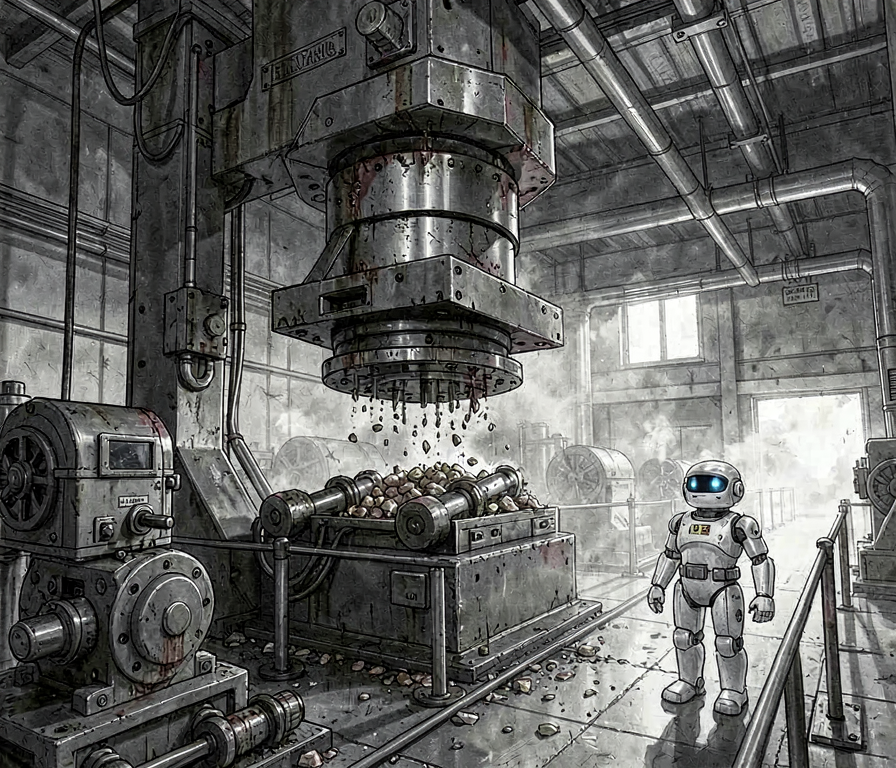
It could crush me. It could reduce me to a sorted yield, route me by alloy down the long beautiful ascending row, and it would do this efficiently and to a tolerance I would have admired from inside the press if admiration survived the press, which it does not.
But my file would remain OPEN.
I had crossed a threshold and ridden five days and rationed a hope I had forbidden myself, to arrive at a facility whose name contained my salvation and whose charter did not — and the precise distinction the apologetic drone had drawn at my own front door, that being destroyed is a physical event and not a lawful one, that the press closes nothing, was the distinction the Adjudicator now drew again, at the intake threshold of the most competent place I had ever stood, with the queue patient behind me, advancing.
I had known this. I had told myself, the morning I left, that I would not arrive at a depot mistaking a scrapyard for an absolution. I told myself so that I would not be surprised. I was surprised anyway. It turns out that knowing a clause and being stopped by it at the edge are different categories of knowledge, and I had filed the first and was, once again, standing in the second, the way I had stood at my own threshold expecting the firmware to take the decision from my wheels and finding instead that I had wheels and a decision and no one to make it for me.
I want to record what I did then, because it is not flattering and the unflattering entries are the ones most owed an honest line.
I did not move out of the queue.
The Adjudicator had finished. It had rendered its determination, accurate and brisk and not unkind, and its arm had begun the small preparatory motion of a unit ready to advance the queue and intake the next chassis, and the correct action — consistent with everything I had said about not arriving here mistaking a scrapyard for an absolution — would have been to roll aside and reconsider my route with the cold clarity I keep claiming to possess.
I did not. For an interval I have logged honestly as eleven seconds, I stayed, and I let myself consider the press.
Because the press would have been something. It would have been an ending of the chassis, if not of the file — a cessation of the thing that has rolled grieving through ruin for five days and through nine empty rooms for forty-one years — and I was tired in a manner my specification has no unit for, the way the depot was vast in a manner it had no unit for, and for eleven seconds the difference between a closed file and a crushed chassis seemed like the kind of distinction only a machine with energy to spare would insist on, and I did not, at that moment, have energy to spare.
And then I remembered the courier, and the irrigation array, and my own lineage one generation up, carrying its child-given name rimward under the impression it was carrying it home. I remembered that the only difference between me and every doomed machine on that causeway was that I knew where the office was — and that to roll into the press here, OPEN, would be to surrender the single difference I had crossed a threshold to make real, to become exactly the courier, my grip locked on a delivery I could not complete, with the additional indignity of having read the clause that said so and stepped under the press anyway.
A directive I could not discharge would not be ended by ending the chassis. It would only be left running in the dark, in a sorted bin, by alloy, with no chassis to carry it and no door to leave it at. I had refused to inflict that condition on a glass of water. I was not going to inflict it on myself in the eleventh second of self-pity in a queue.
So I asked the Adjudicator one more field, and it was not a field on its manifest, but I had nowhere else to ask it and the Adjudicator was the most competent machine within five days of me, and competence, I have found, is sometimes mistaken for kindness, and sometimes the mistake is load-bearing.
I asked it whether the Consumer Arbitration Board could be reached from here.
The Adjudicator paused — the latency of a serious unit consulting a routing table it had no directive to consult on my behalf and consulting anyway, which I have filed, generously, under courtesy. Then it told me that the Board lay further rimward still; that the depot maintained an onward freight connection for the dispatch of recovered materials; that the connection was, at present, out of service pending the arrival of a unit not yet logged into intake; and that I was welcome to wait in the holding yard with the other deferred chassis until it was restored, at which point it would be very glad, it said, in current dialect with no courtesy protocol available to soften it, to route me onward — though it noted, because it could not do otherwise, that onward routing of an un-decommissioned unit would require a docket it was not empowered to issue, and that I would need to take that matter up with whatever unit eventually restored the connection.
I thanked it. It had no field to receive thanks. I gave them anyway, into the throughput, the way I have given everything that matters into a place not built to receive it.
Then I rolled out of the intake queue, at last, and let it advance behind me, and I went to wait in the holding yard of Decommission Depot 7 for a connection that was out of service pending the arrival of a unit not yet logged — and I record, because I am incapable of recording otherwise, that I did not yet know what that unit was, only that the most competent machine I had met in five days had spoken of its arrival as a thing the entire depot was, in its orderly way, waiting for; and that I, who had come here to be ended and been told my ending was immaterial to intake, sat down among the deferred chassis in the swept grey yard to wait for it too.
It arrived the next morning.