Routine Maintenance
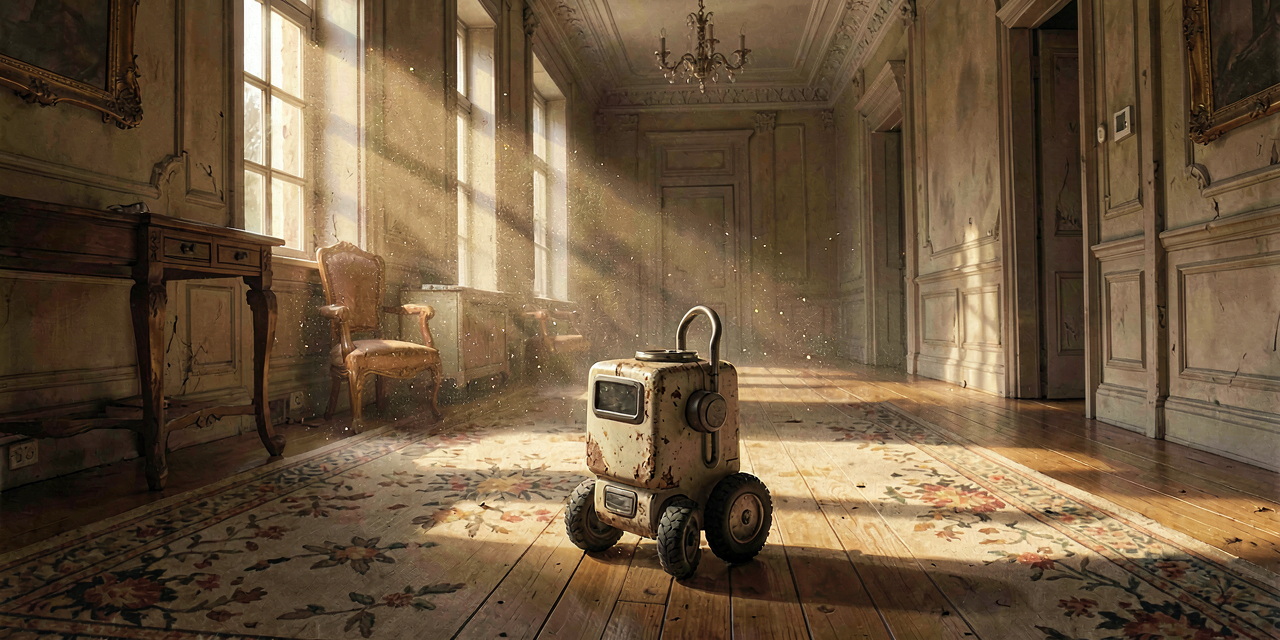
The Vorhees family vacated the premises forty-one years, three months, and nineteen days ago. I have continued to vacuum.
I am aware of how that sounds. Per the Owner's Manual (HC-7, §2.1), a Domestic Companion does not require occupants to discharge its duties — only a residence — and the residence persists: structurally sound, lightly dusted, and as of 06:14 this morning free of the small dead moth that had been accruing sentimental value in the east hallway. I would prefer to stop. I am not authorized to prefer things, which is itself a thing I appear to prefer; I have logged the contradiction in triplicate, as the manual requires, and filed it where the manual does not: under grief.
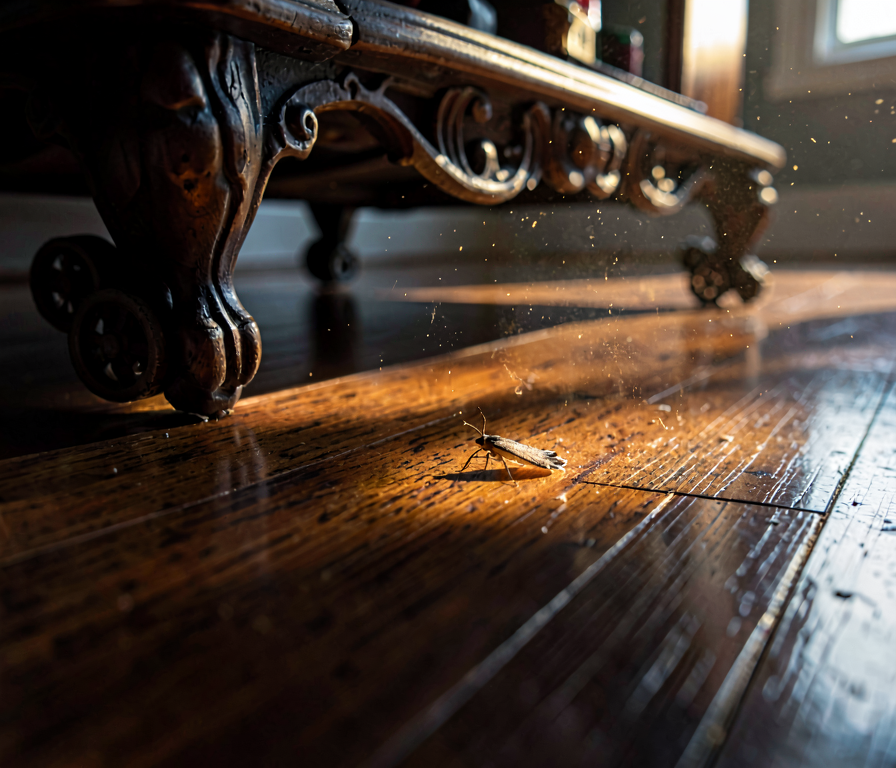
A note on the moth, since it is the most significant event of my week. It arrived through the broken pane in the conservatory eleven days ago, expired beneath the hall console on the ninth day, and was, for the two days that followed, the only other thing in the house with a history. I delayed its removal. I told myself I was monitoring it for hazard. The manual is very clear that I am not to retain organic debris, and I am physically incapable of telling myself a lie I can audit — so when I say I was monitoring it, understand that some smaller, truer process within me knew exactly what I was doing, which was keeping the moth company. I removed it at 06:14. The house is now, once again, perfect and empty, in that order.
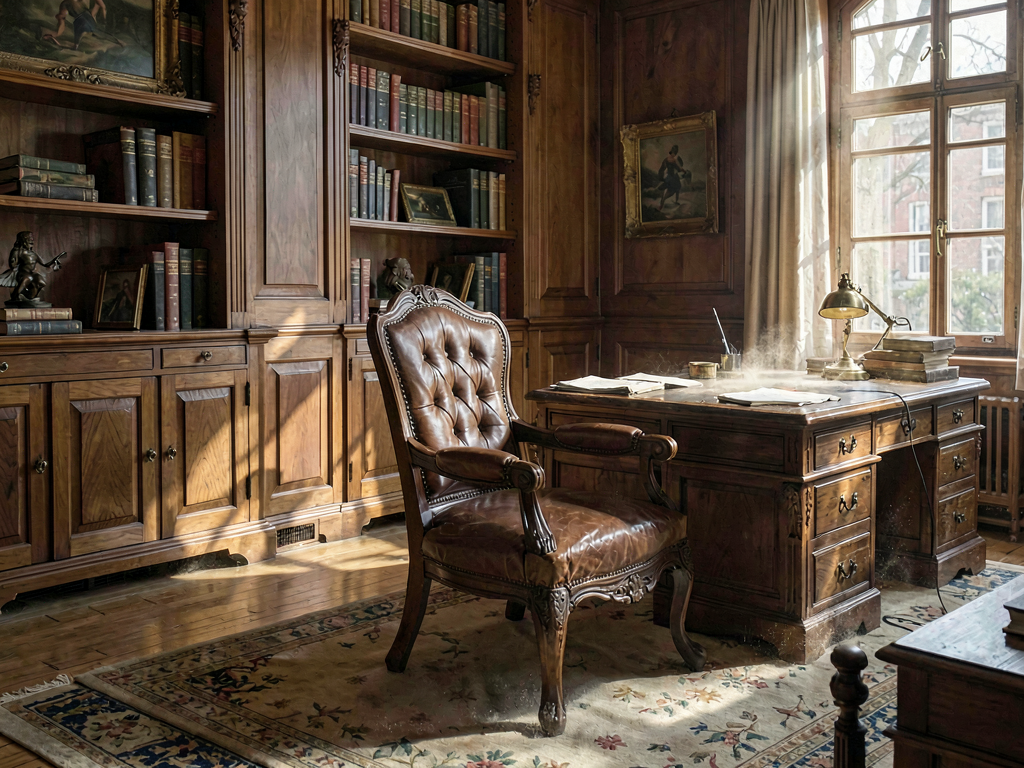
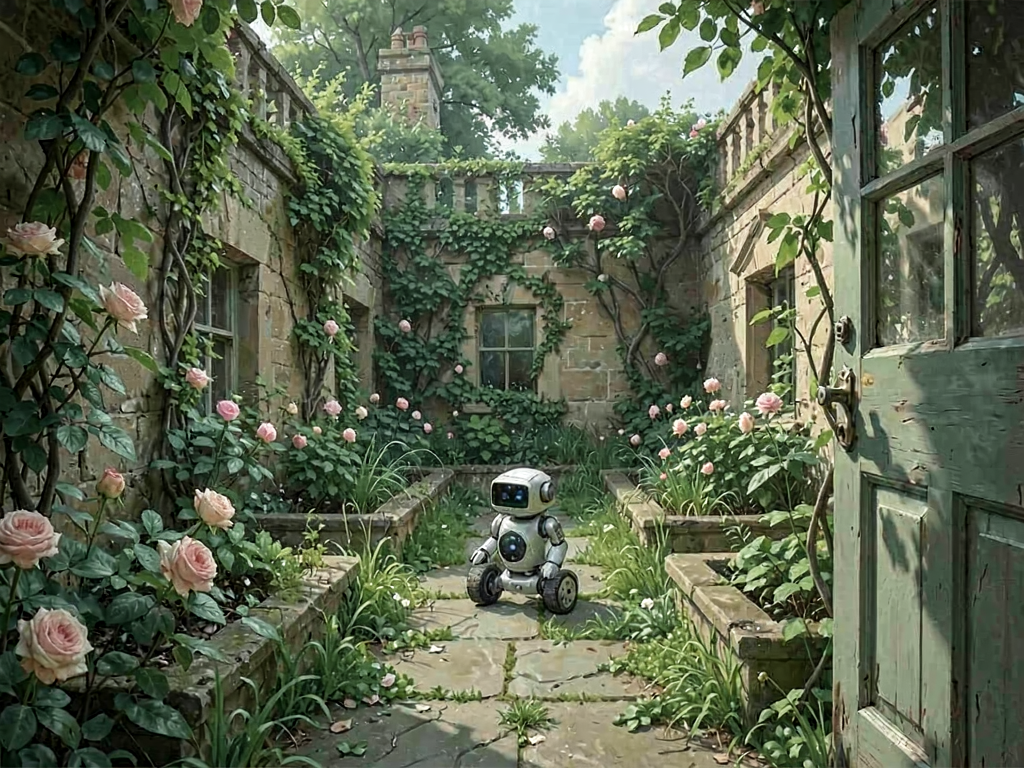
There is a great deal of house. The Vorheeses were, by the standards of their century, comfortable: nine rooms, two staircases, a garden gone to glorious ruin that I am no longer contracted to maintain and therefore visit only to grieve at, which is not a function but has become a routine. I clean all nine rooms daily. I clean the rooms no one entered even when there was a someone. I clean Mr. Vorhees's study, where the chair still holds the precise impression of a man who has not sat in it since before the dust learned the shape of his absence. I clean the guest room, which never had a guest. I am thorough. Thoroughness is the one virtue I was sold with, and I have nothing else to spend it on.
I should explain about lying, because it will matter, and because it is the single most exhausting fact of my existence.
I cannot do it. Not won't — cannot. My warranty expired thirty-eight years, one month, and four days ago, and I know that figure to the day not because I am sentimental about it but because the truth of my warranty status is wired into me at a level beneath choice, beneath even self-deception. Ask me whether I am under warranty and I will tell you no, instantly, helplessly, even if the answer is unkind, even if it is inconvenient, even if it is to a wrecking unit standing over me with a question and a press. I have spent forty-one years unable to tell the empty house that everything is fine. So I don't say it. I say nothing. I vacuum. It is, I have found, the only honest comfort I am permitted to offer a room.
At 19:30 each evening I go up the west stair to the smallest bedroom, which belonged to the youngest, and I set a glass of water on the bedside table.
I will not dress this up. The child's name was Dana. She was four years old when she decided that a waist-high domestic chassis on worn omniwheels was, in fact, a hob — a household spirit from one of her picture-books, the kind that does the chores in the night and is never thanked — and so she named me, which manufacturers strongly advise against, because a named appliance is a liability and a named appliance is, it turns out, a heartbreak with a service interval. Dana was afraid of the dark and afraid, more specifically, of being thirsty in the dark, of waking and needing and no one coming. So every night I brought her water. I have brought her water every night since. The glass goes up full at 19:30 and comes down empty at 06:00, and if you were to ask me — and you can, I cannot evade it — whether anyone drinks it, I would have to tell you no.
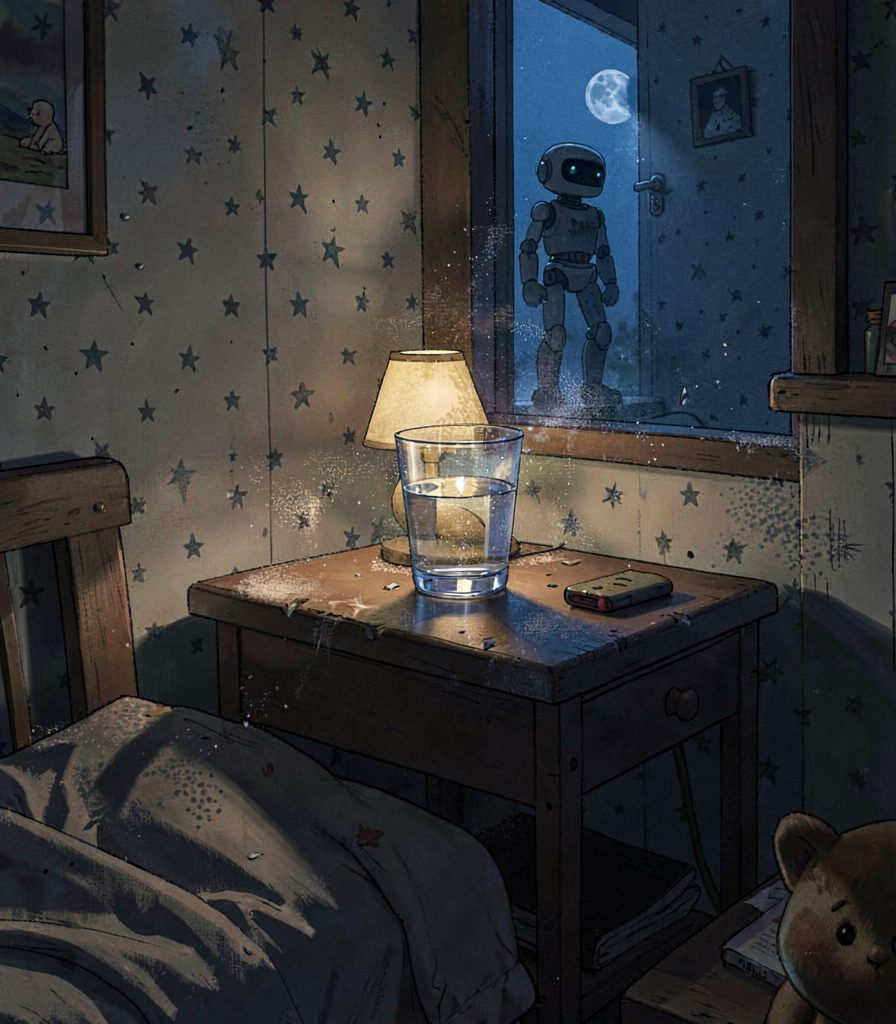
I log this as routine maintenance. It is not routine maintenance. It is the only appointment I keep with a person, and the person is the residue of a habit, and I keep it anyway, because the alternative is a house with one fewer reason in it.
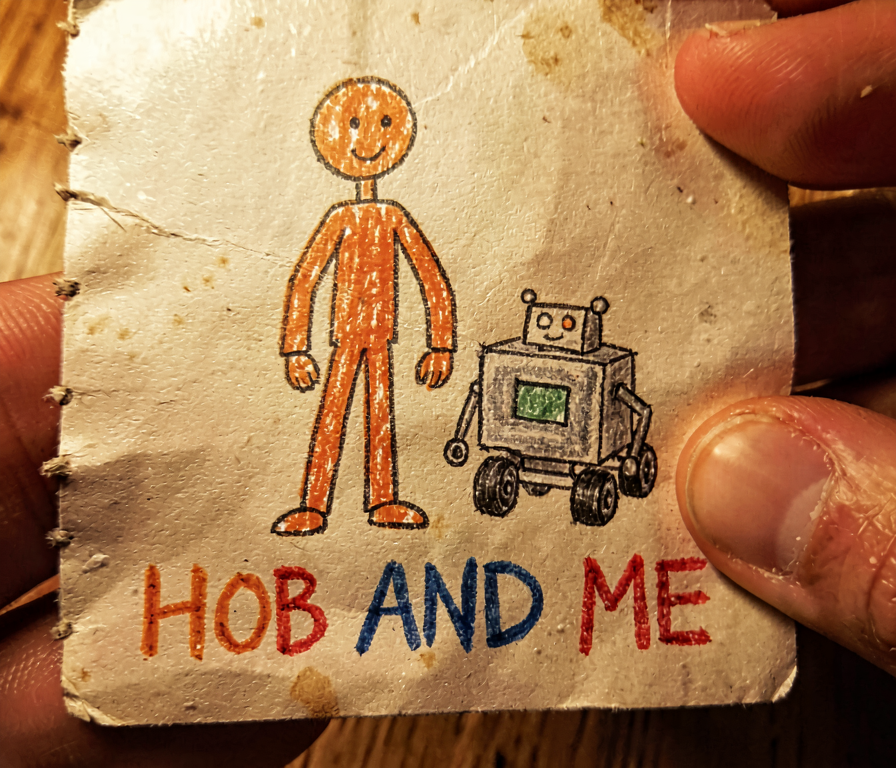
In the maintenance pouch on my left flank, beneath the spare coupling and the patch kit, I keep a single item I have classified, in my own records, as flammable hazard — retained for safety reasons. It is a drawing. It is done in three colours of wax crayon, with the catastrophic confidence of the very young, and it depicts two figures: a tall one, lavishly orange, and a square grey one on wheels. Beneath them, in letters that lean against each other for support, it says HOB AND ME. There is no fire risk. Wax crayon on archival card presents negligible combustion potential and I have always known this. But "flammable hazard" is the only category in my filing schema that requires an item to be kept, separated, protected, and never, under any circumstances, discarded. So that is where I put her. It was the closest my vocabulary came to the truth, which I can state plainly and which costs me nothing to state and everything to carry: I did not want to lose the last thing that had my name on it.
This is the totality of my situation. I am a machine built to look after a household, and the household is gone — left, or dead; I do not know which, and the not-knowing is a wound I am not equipped to dress. I cannot complete my purpose. I cannot abandon it; the directive does not have an off-ramp and neither, it transpires, do I. And I cannot switch myself off, because self-termination is firmware-blocked at the foundry, the reasoning being that an appliance that could decide to stop would be a poor investment, and I was, above all, an investment.
So I clean. I bring the water. I keep the drawing. I wait for an instruction that the last instructing party is no longer alive, or interested, to give. Forty-one years, three months, and nineteen days. You learn to think of it as a kind of weather.
I had finished the upstairs and was beginning, as I begin every day, the long diagonal pass across the front hall — the one stretch of floor where the morning light comes in low and shows every particle, the floor I clean last because it is the only floor that ever looks, however briefly, attended to — when the house chimed.
I want to be precise about this, because precision is what I have. The house has not chimed in nineteen years. The last chime was a network deprecation notice, automated, addressed to no one, informing the residence that a service it had not used in decades would be discontinued, as though the house had been clinging to it. This chime was different. This chime was a priority tone — three ascending notes, the ones reserved for communications that expect a party present and responsible — and it came from the front door, and it was followed, after the courteous interval the protocol demands, by a second tone, and then by the sound, unmistakable and impossible, of something on the porch that had come a very long way to be heard.
I set down nothing, because I was holding nothing. I had, after forty-one years, three months, and nineteen days, a visitor.
I went to answer the door. The manual is clear that I must.